The RESTORE Stack
The repair duo: recovery inside and out.
$152.00 15% off
What’s inside
Your stack, unpacked
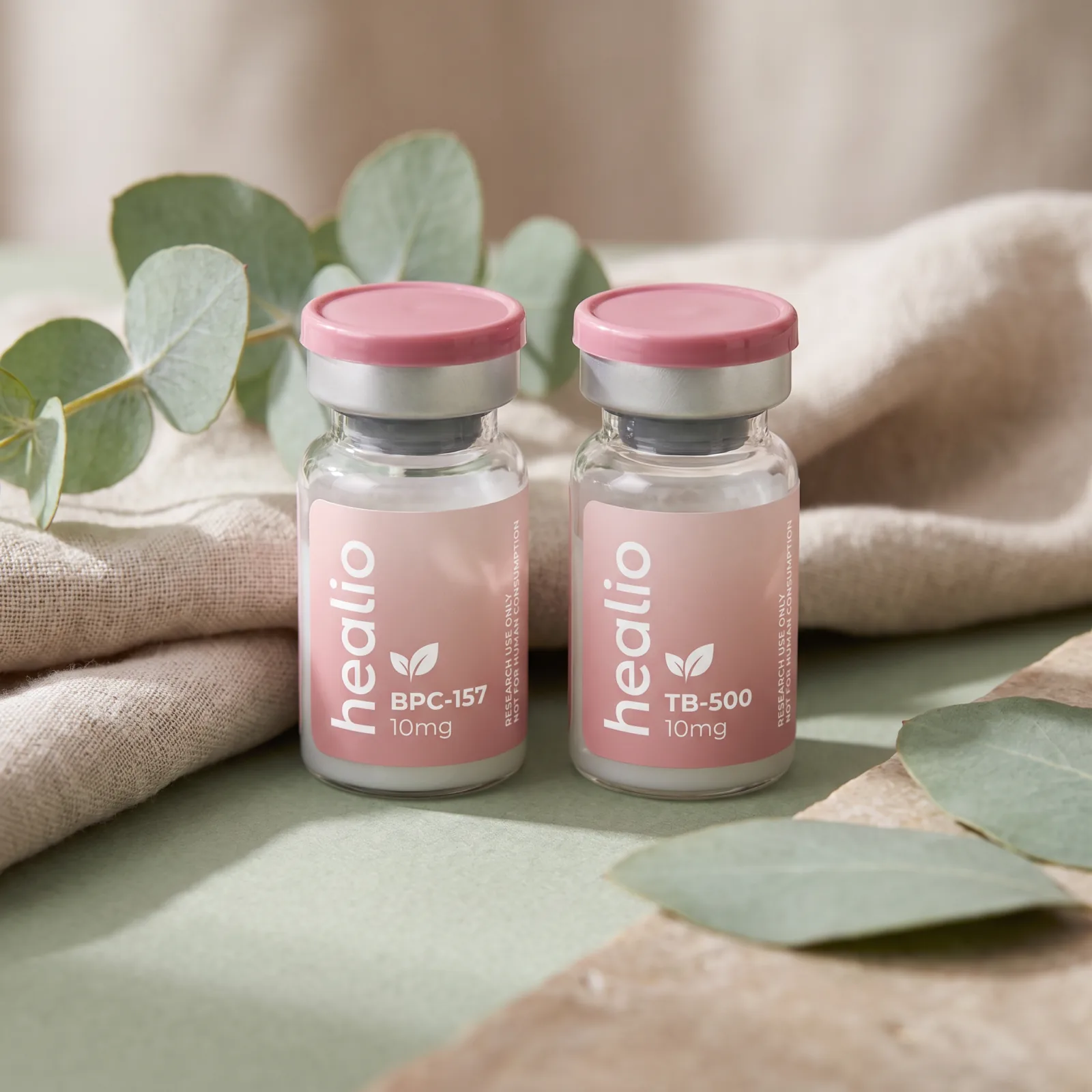
The RESTORE Stack brings together the two most studied recovery peptides: BPC-157 for gut and tissue repair, and TB-500 for flexibility and cell migration. The go-to pairing in recovery research.
What is the RESTORE Stack?
The RESTORE Stack pairs BPC-157 and TB-500, the two compounds most frequently studied together in tissue repair research, supplied as a set at a stack price.
Of all the peptide combinations sold as stacks, this is the one with the strongest claim to being a genuine research pairing rather than a marketing bundle. The two appear together across the recovery literature often enough to be treated as a single subject.
What is in the RESTORE Stack
| Compound | Research focus | Mechanism studied |
|---|---|---|
| BPC-157 | Tendon, ligament, gut lining | Angiogenesis, vascularisation of repair sites |
| TB-500 | Soft tissue repair | Cell migration, actin regulation |
Why BPC-157 and TB-500 are studied together
The mechanisms are complementary rather than redundant, which is the entire reasoning behind the pairing.
BPC-157 research emphasises blood vessel formation at a repair site. Better vascularisation means better delivery of everything a healing process requires. TB-500 research emphasises cell migration and actin regulation, which is about getting repair cells to that site and organising structural proteins once they arrive. One addresses supply, the other addresses assembly.
Worth stating plainly: studies of the combination specifically are considerably thinner than studies of either compound alone, and the underlying research for both is predominantly preclinical. Our guide to peptides for recovery sets out where the evidence stops.
RESTORE Stack specifications
| Specification | Detail |
|---|---|
| Contents | BPC-157, TB-500 |
| Form | Lyophilized powder, sealed vials |
| Purity | Minimum 98% each, verified by HPLC |
| Identity | Confirmed by mass spectrometry |
| Testing | Independent third-party laboratory, per batch |
| Origin | Shipped from the United States |
Reconstitution and storage
Both vials ship lyophilized and require reconstitution with bacteriostatic water. Add diluent slowly down the vial wall, allow the powder to dissolve without agitation, and do not shake. Store sealed vials at minus 20 degrees Celsius away from light; refrigerate after reconstitution.
Certificate of analysis for every vial
Each vial carries its own batch certificate from an independent US analytical laboratory, with HPLC purity to a minimum of 98% and identity confirmed by mass spectrometry, published at our research page before purchase.
Where the RESTORE Stack fits
Both compounds sit in the peptides for healing collection. For research on inflammatory signalling alongside tissue repair, KPV is the compound usually studied next to this pair.
RESTORE Stack FAQ
What peptides are in the RESTORE Stack?
BPC-157 and TB-500, each supplied as an individually tested lyophilized vial with its own published batch certificate.
Why are BPC-157 and TB-500 stacked?
Their studied mechanisms complement each other. BPC-157 research emphasises blood vessel formation; TB-500 research emphasises cell migration and structural organisation.
Is there human research behind this combination?
No. The underlying research for both compounds is predominantly animal and cell culture work, and studies of the combination specifically are thinner still.
Does each vial come with its own COA?
Yes, tested by batch at an independent laboratory with certificates published before purchase.
Research focus
- Tissue repair research
- Recovery and flexibility studies
- Gut and connective-tissue models
- Better value than buying separately
Who it’s for
For researchers focused on
-
EssentialBest Seller
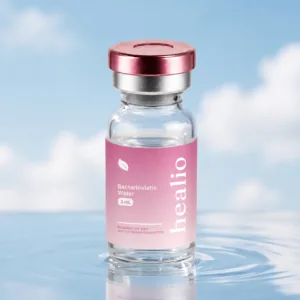
Bacteriostatic Water 3ml
Sterile Reconstitution Water
$9.99SizeAdd to Cart3 mL -
3-in-1 StackBest Seller
The GLOW Stack
Skin + Beauty Ritual
$229.00 -
Gut Health
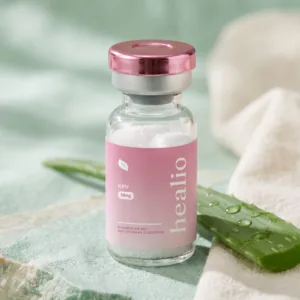
KPV
Gut + Inflammation Support
$89.00SizeAdd to Cart10mg -
3-in-1 StackBest Seller
The VITALITY Stack
Feminine Vitality Blend
$195.00