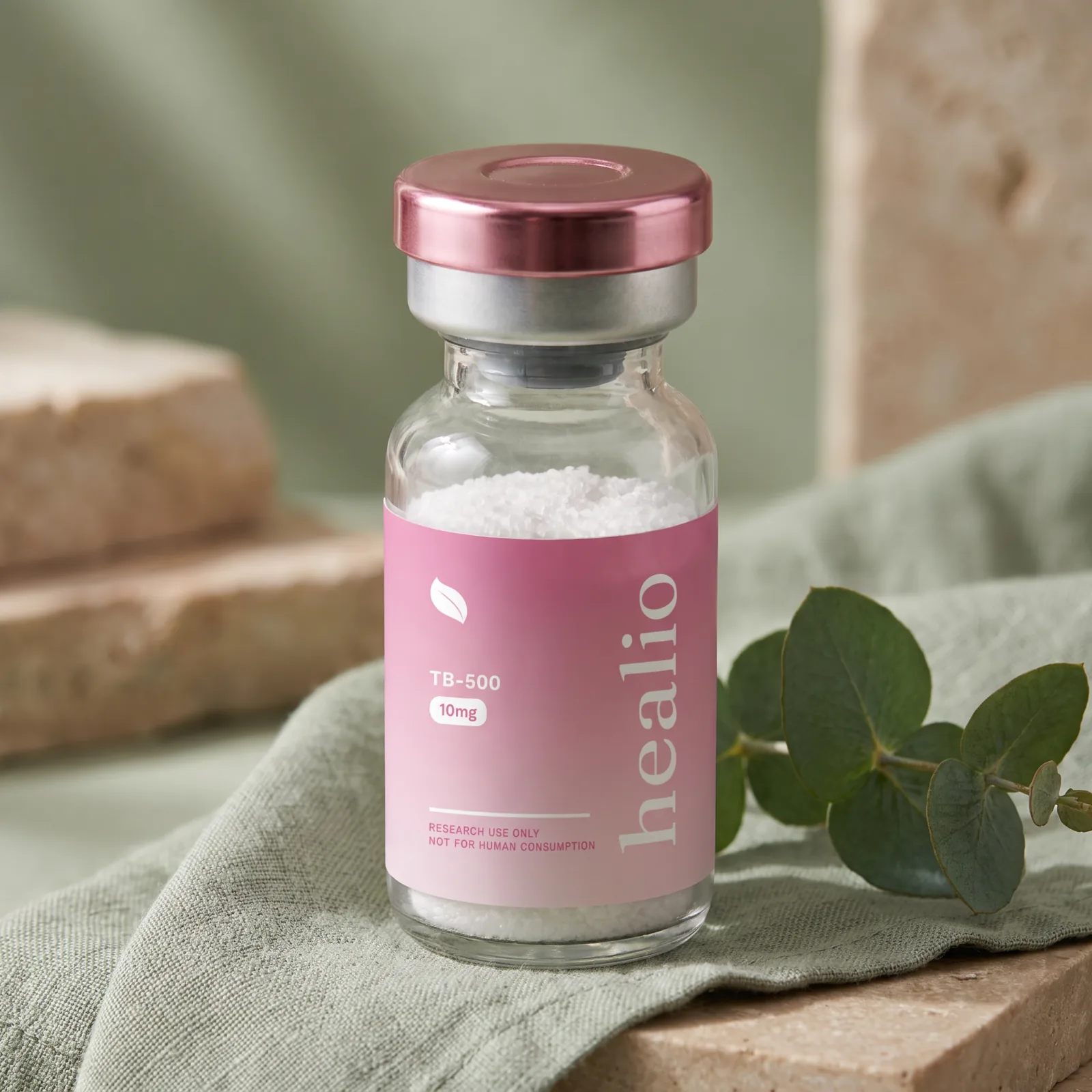
TB-500
Tissue repair and recovery research peptide.
$74.99 30% off
TB-500 is a synthetic version of Thymosin Beta-4, a naturally occurring peptide involved in cell migration and tissue repair. It is widely studied alongside BPC-157 in recovery research.
What is TB-500?
TB-500 is a synthetic fragment of thymosin beta-4, a naturally occurring protein involved in cell migration and tissue repair. It is not the full protein but the active region of it, which is why it appears in research as a practical laboratory material rather than a difficult-to-produce full-length molecule.
Thymosin beta-4 is one of the most abundant proteins in many cell types and is heavily involved in actin regulation, the protein scaffolding that lets cells change shape and move.
TB-500 research applications
Published research concentrates on soft tissue repair, cell migration, and actin sequestration. It is studied in tendon, ligament and muscle repair models, and frequently alongside BPC-157 on the reasoning that the two mechanisms address different stages of the same process.
The same caveat applies as across this category: the work is predominantly preclinical, and rodent musculoskeletal findings have a mixed record of transferring to human outcomes.
How TB-500 works
The core mechanism studied is actin binding. Actin is the structural protein that allows cells to migrate, and repair depends heavily on the right cells arriving at a damaged site and organising themselves once there. By influencing actin availability, thymosin beta-4 fragments appear to affect that migration process.
Secondary research areas include angiogenesis and inflammatory modulation, though these are less well characterised than the actin work.
TB-500 for sale: specifications
| Specification | Detail |
|---|---|
| Compound | TB-500 (thymosin beta-4 fragment) |
| Class | Synthetic peptide fragment |
| Form | Lyophilized powder, sealed vial |
| Purity | Minimum 98%, verified by HPLC |
| Identity | Confirmed by mass spectrometry |
| Testing | Independent third-party laboratory, per batch |
| Origin | Shipped from the United States |
TB-500 vs BPC-157
| Property | TB-500 | BPC-157 |
|---|---|---|
| Origin | Thymosin beta-4 fragment | Gastric protein fragment |
| Primary mechanism studied | Cell migration, actin regulation | Angiogenesis, vascularisation |
| Strongest research area | Soft tissue repair | Tendon repair, gut lining |
| Evidence type | Mostly preclinical | Mostly preclinical, larger volume |
Both are supplied together, with GHK-Cu, in the GLOW 70 blend, and with KPV added as well in KLOW 80.
Reconstitution and handling
Supplied lyophilized. Reconstitute with bacteriostatic water, adding the diluent slowly against the vial wall and allowing the powder to dissolve undisturbed. Do not shake. Bacteriostatic water is stocked separately.
Storage and stability
Store sealed lyophilized vials at minus 20 degrees Celsius, protected from light. Reconstituted material requires refrigeration and a shorter usable window. Do not freeze and thaw repeatedly.
Certificate of analysis for every batch
Independent third-party testing on every batch, covering HPLC purity to a minimum of 98% and mass spectrometry identity confirmation. Certificates are published openly at our research page before you order.
Why researchers buy TB-500 from Healio
Published batch certificates from an unaffiliated laboratory, verified purity and identity rather than claimed purity, and US dispatch with cold-chain handling. The full recovery range is under peptides for healing.
TB-500 FAQ
What is TB-500 used for in research?
Soft tissue repair models, cell migration studies, and actin regulation research, often in combination with BPC-157. Supplied for laboratory use only.
Is TB-500 the same as thymosin beta-4?
No. TB-500 is a synthetic fragment representing the active region of thymosin beta-4, not the complete protein.
Is TB-500 banned in sport?
Compounds in this class appear on anti-doping prohibited lists, which is a relevant consideration for competitive athletes and separate from laboratory research use. Check current WADA listings directly.
What testing does Healio TB-500 carry?
Independent third-party HPLC purity to a minimum of 98% with mass spectrometry identity confirmation, published per batch.
Research focus
- Tissue repair research
- Flexibility and recovery studies
- Cell-migration models
- Connective-tissue research
Who it’s for
For researchers focused on
| Scientific name | Thymosin Beta-4 Fragment |
|---|---|
| CAS number | 77591-33-4 |
| Molecular formula | C212H350N56O78S |
| Molecular weight | 4963.4 g/mol |
| Sequence | Thymosin Beta-4 (43 residues) |
| Purity | 98%+ (HPLC) |
| Form | Lyophilized powder |
| Appearance | White to off-white powder |
Store the lyophilized powder at -20u00b0C, protected from light. Brief exposure to room temperature during shipping does not affect stability.
After reconstitution, keep refrigerated at 2 to 8u00b0C and use within the research window. Do not freeze the reconstituted solution.
For laboratory research use only. Reconstitute with bacteriostatic water and handle with appropriate protective equipment.
-
EssentialBest Seller
Bacteriostatic Water 10ml
Sterile Reconstitution Water
$9.99SizeAdd to Cart10 mL -
Longevity
Epitalon
Longevity + Sleep Support
From $59.99This product has multiple variants. The options may be chosen on the product pageSizeAdd to Cart -
Gut Health
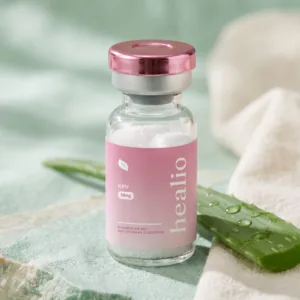
KPV
Gut + Inflammation Support
$44.99SizeAdd to Cart10mg -
Beauty BlendBest Seller
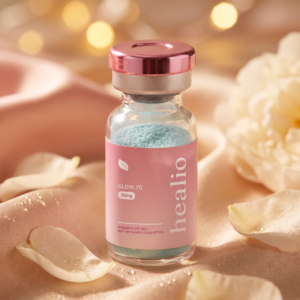
GLOW 70
Skin + Collagen + Repair Blend
$104.99SizeAdd to Cart70mg